Search Results
173 results found with an empty search
- Elephant in the Room of Health Care
There has been little mention of collections, scheduled fee controls, debt write-offs and other important factors in the debates about repealing and replacing of the Affordable Health Care Act. Adjusting these items can drastically change healthcare costs in the United States. The Good Samaritan Laced in the American hospital system is a notion of the Good Samaritan. Americans do not leave its citizens on the streets to die when in need of medical care. There are many charitable hospitals and medical facilities all over our nation. Some are religious, and others are facilities of mercy provided by the generous donations of our citizenry. Title XVI Title XVI of the Social Security Act offers specific protections for aged, blind, and disabled persons. American citizens frequently fall through the safety net and become inpatients in medical centers without visible evidence of medical insurance, or possess an insurance policy whereby an insurance company has refused to pay the medical bill as a result of the patient having a preexisting condition. An extraordinary amount of revenue is spent in this one area alone. Most individuals that have serious medical conditions rely on Title XVI medical coverage when their medical insurance policies rejects coverage due to preexisting conditions. Most of these individuals qualify for Title XVI coverage as they are either expected to be permanently disabled, or are expected to live less than one year. Bogus Insurance Policies? It is of little concern from whence a medical insurance policy comes if the policyholder possesses a preexisting condition. I know that there is a whole lot of talk about preexisting conditions in medical insurance policies, but there is little information available how a preexisting condition affects an insurance policy holder. Let's make it simple. For patients admitted into medical facilities through E.R.; time is very important! Who thinks about insurance when a patient is in helpless peril? Doctors go to work immediately. On many occasions, relatives are unavailable to provide insurance information. Some patients have medical insurance cards in their possession; others have no visible means of paying the medical facility. Most patients once stabilized, are admitted into to the medical facility dependent upon his or her condition. The patient then provides information regarding bill payment, if available. If the patient possesses a medical insurance policy, the hospital requests a "treatment authorization" for present and future services. If this request for treatment is denied and, if the patient possesses no visible means of making payment to the medical facility, this account becomes a collection account. If the medical facility is a charitable hospital, then it would be prudent for the medical center to transfer the patient to a government funded facility unless there are mitigating circumstances. If the insurance company denies coverage for a presented "treatment authorization request", and there are many reasons to deny a bill, then on most occasions the patient is later dunned by the in-house collection department of the medical facility for payment. If the insurance company does not pay this medical bill, or the patient does not pay within a stipulated period, the medical bill will be eligible for a write-off. This period is normally for about 90 days. Follow The Money Once the hospital writes off a bill, this is one justification for later increasing medical costs. Medical facilities also make assignments to collection agencies for a great portion of the medical bill once it is determined that the medical account will become uncompensated. Later clever medical collectors and consultants track down the patient, assist the patient in becoming eligible for a governmental benefits programs, or other charity programs that pays the medical bills for patients that fall through the cracks. Then these collectors and consultants bill these items to the government for the medical facilities and later identify these items on hospital "remittance advice's" from the payers of these medical accounts once a payment has been established. The lions share of the government's payment of the bill goes to the collection agency. Believe it or not, a huge amount of money is paid by the government for these medical bills that are hospital write-offs, a black hole where our hospital dollars are going. TAXPAYERS ARE PAYING FOR THESE MEDICAL BILLS AT HIGHER COSTS! It will be much cheaper to pay medical bills for all citizens. Free doctors and outpatient care will reduce expensive E.R. admissions thereby reducing costs measurably. The process is clear, but what is happening presently is most important for the patient, and for all Americans to understand. I will show you where your hospital dollars are going if you will read my free newsletter reports. Subscribe above.
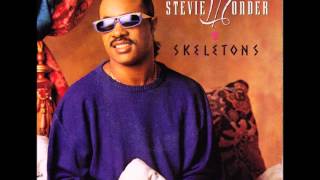
- Mueller is pulling out the Skeletons!
The whole story is being told in this recording: Skeletons Skeletons in your closet Itchin' to come outside Messin' with your conscience In a way your face can't hide Oh things are gettin' real funky Down at the old corral And it's not the skunks that are stinkin' It's the stinkin' lies you tell, yeh What did your mama tell you about lies She said it wasn't polite to tell a white one What did your daddy tell you about lies He said one white one turns into a black one So, it's gettin' ready to blow It's gettin' ready to show Somebody shot off at the mouth and We're gettin' ready to know It's gettin' ready to drop It's gettin' ready to shock Somebody done turned up the heater An'a it's gettin' ready to pop Crevices in your pantry Now what do we have in here Havin' a daytime nightmare Has always been your biggest fear Oh things are gettin' real crucial Up the old wazoo Yet you cry, why am I the victim? When the culprit's why-o-you, oo oh What did your mama tell you about lies She said it wasn't polite to tell a white one What did your daddy tell you about lies He said one white one turns into a black one So, it's gettin' ready to blow It's gettin' ready to show Somebody shot off at the mouth and We're gettin' ready to know It's gettin' ready to drop It's gettin' ready to shock Somebody done turned up the heater An'a it's gettin' ready to pop It's gettin' ready to seep You're gettin' ready to freak Somebody done picked up the talk box We're gettin' ready to speak It's gettin' ready to jive It's gettin' ready to gel Somebody done gone let the lid off It's gettin' ready to smell They're gettin' ready to deal You're gettin' ready to ill Somebody done just dropped the big dime They're gettin' ready to squeal It's gettin' ready to turn We're gettin' ready to learn Somebody done fired up the brimstone You're gettin' ready to burn It's gettin' ready to shake You're gettin' ready to ache Somebody done snitched to the news crew It's gettin' ready to break You're gettin' ready to lie They're gettin' ready to spy Somebody's been put on the hot seat They're gettin' ready to fry!!!!!!! Read more: Stevie Wonder - Skeletons Lyrics | MetroLyrics
- Will Tax reductions for the rich bring more jobs?
Old School Philosophy A plan for jobs growth in America is needed desperately. There have been many adjustments, however regarding how businesses employ labor. Excess labor is no longer a determinate of profit. Some are realizing that excess labor decreases profit. The plan to decrease the taxes on the job producers is designed to unleash revenue necessary for hiring more labor, but history has shown that company executives use increased revenue to increase profit, not employ labor. Recent history unveils that companies are leaning toward robotics, computers, artificial intelligence and outsourcing to boost their profit margins. Resurrecting the Dead Many comments are made about the necessity of higher paying jobs, but budgets have not included education for those that have lost employment because of high-tech expansion. It is a monumental task to re-train entire communities, and It is difficult to change the mindset of people accustomed to working in a certain industry. Still, Mr. Trump constantly speaks of bringing back industries that have been dead and stinking for decades. Perhaps retraining support would be better, but Mr. Trump seems to like living in the days of yore. He realizes that his supporters will support his every effort to turn back the hands of time even at the peril of losing the entire nation. Many of us beg to disagree. Obsolete Thinking Old men ponder for years on ideas that have become obsolete. They still continue to promote these old plans as if they were new. If placed in charge, their shortness in vision will thereby attempt them to change past advances for their obsolete ideas, thereby delaying progress. We must think more progressive and support systems that will enable more of our citizens to have leverage to deal with a runaway economy that caters to the rich exclusively. The public must now come together with a system that will take the thunder from lies and deceit. We have a plan. Indulge us!
- High cholesterol 'does not cause heart disease' new research finds, so treating with statins
June 13, 2016 Henry Bodkin VisualDNA Audience Analytics API Import End of VisualDNA Audience Analytics API Import BEGIN Krux Control Tag for "telegraph.co.uk" Source: /snippet/controltag?confid=IL2HXIjT&site=telegraph.co.uk&edit=1&raw=1 END Krux Controltag StartFragment Cholesterol does not cause heart disease in the elderly and trying to reduce it with drugs like statins is a waste of time, an international group of experts has claimed. A review of research involving nearly 70,000 people found there was no link between what has traditionally been considered “bad” cholesterol and the premature deaths of over 60-year-olds from cardiovascular disease. Published in the BMJ Open journal, the new study found that 92 percent of people with a high cholesterol level lived longer. VisualDNA Audience Analytics API Import End of VisualDNA Audience Analytics API Import BEGIN Krux Control Tag for "telegraph.co.uk" Source: /snippet/controltag?confid=IL2HXIjT&site=telegraph.co.uk&edit=1&raw=1 END Krux Controltag StartFragment"Lowering cholesterol with medications is a total waste of time"Professor Sherif Sultan, University of IrelandEndFragment High cholesterol 'does not cause heart disease' new research finds, so treating with statins a 'waste of time' VisualDNA Audience Analytics API Import End of VisualDNA Audience Analytics API Import BEGIN Krux Control Tag for "telegraph.co.uk" Source: /snippet/controltag?confid=IL2HXIjT&site=telegraph.co.uk&edit=1&raw=1 END Krux Controltag StartFragment The authors have called for a re-evaluation of the guidelines for the prevention of cardiovascular disease and atherosclerosis, a hardening and narrowing of the arteries, because “the benefits from statin treatment have been exaggerated”. The results have prompted immediate scepticism from other academics, however, who questioned the paper’s balance. High cholesterol is commonly caused by an unhealthy diet, and eating high levels of saturated fat in particular, as well as smoking. It is carried in the blood attached to proteins called lipoproteins and has been traditionally linked to cardiovascular diseases such as coronary heart disease, stroke, peripheral arterial disease and aortic disease. High cholesterol 'does not cause heart disease' new research finds, so treating with statins a 'waste of time' VisualDNA Audience Analytics API Import End of VisualDNA Audience Analytics API Import BEGIN Krux Control Tag for "telegraph.co.uk" Source: /snippet/controltag?confid=IL2HXIjT&site=telegraph.co.uk&edit=1&raw=1 END Krux Controltag StartFragment Co-author of the study Dr Malcolm Kendrick, an intermediate care GP, acknowledged the findings would cause controversy but defended them as “robust” and “thoroughly reviewed”. “What we found in our detailed systematic review was that older people with high LDL (low-density lipoprotein) levels, the so-called “bad” cholesterol, lived longer and had less heart disease.” Vascular and endovascular surgery expert Professor Sherif Sultan from the University of Ireland, who also worked on the study, said cholesterol is one of the “most vital” molecules in the body and prevents infection, cancer, muscle pain and other conditions in elderly people. “Lowering cholesterol with medications for primary cardiovascular prevention in those aged over 60 is a total waste of time and resources, whereas altering your lifestyle is the single most important way to achieve a good quality of life,” he said. Lead author Dr Uffe Ravnskov, a former associate professor of renal medicine at Lund University in Sweden, said there was “no reason” to lower high-LDL-cholesterol. But Professor Colin Baigent, an epidemiologist at Oxford University, said the new study had “serious weaknesses and, as a consequence, has reached completely the wrong conclusion”. Another sceptic, consultant cardiologist Dr Tim Chico, said he would be more convinced by randomised study where some patients have their cholesterol lowered using a drug, such as a stain, while others receive a placebo. He said: “There have been several studies that tested whether higher cholesterol increases the risk of heart disease by lowering cholesterol in elderly patients and observing whether this reduces their risk of heart disease. “These have shown that lowering cholesterol using a drug does reduce the risk of heart disease in the elderly, and I find this more compelling than the data in the current study. ”The British Heart Foundation also questioned the new research, pointing out that the link between high LDL cholesterol levels and death in the elderly is harder to detect because, as people get older, more factors determine overall health. “There is nothing in the current paper to support the author’s suggestions that the studies they reviewed cast doubt on the idea that LDL Cholesterol is a major cause of heart disease or that guidelines on LDL reduction in the elderly need re-valuating,” a spokesman said. StartFragmentAt a glance | Heart disease:EndFragment Coronary heart disease (CHD) is caused by the build-up of fatty substances on the walls of the arteries around the heart. The build-up of these fatty deposits make the arteries narrower, restricting the flow of blood to the heart. This process is called atherosclerosis. This can be caused by a number of lifestyle factors and conditions, including smoking, high cholesterol, high blood pressure and diabetes. Other risk factors include obesity and family history of CHD. Source: NHS EndFragment EndFragment EndFragment EndFragment
- Why investors are to blame for labor’s woes
February 2010, nobody’s celebrating. Workforce participation is stuck near historic lows, six million people are part-timers but want to work full time, and wage growth remains subdued. Both presidential candidates have talked a good game about jobs and the economy, but neither addresses the real problem. The U.S. job-creation machine—once the envy of the world—is broken, because American corporations cannot create steady, well-paying jobs here in the USA while also providing maximal returns to their investors, who are really in charge. So says Gerald Davis, a professor at the University of Michigan’s Ross School of Business, who has studied these issues for years. I’ve read many books and articles on this subject, and I find Davis’s arguments among the most cogent. A short piece he wrote late last year for Brookings and a new book, “The Vanishing American Corporation,” trace the big changes in American corporations from the job-rich giants of the post-World War II era to job killers now, because the mission of the corporation has changed radically. Corporations’ new, exclusive emphasis on shareholder value—enforced by executive-compensation packages in which equity comprised 62.2% of S&P 500 CEOs’ total compensation in 2015, according to Equilar—has pushed top executives to replace humans with robots, send jobs overseas or bring in lower-paid immigrants to do them here, hire part-time or temporary workers (or glorified day laborers and Uber “contractors”) instead of full-time ones, and lay off thousands of employees even when profits are soaring. Cutting labor costs boosts earnings, which tends to push stock prices (and executive compensation) higher, and frees up cash for more “important” things like dividends or share buybacks. As of March, S&P 500 companies had bought back more than $2 trillion in stock over the last five years, making buybacks the biggest source of demand for stocks since 2009, HSBC estimated. That makes big pension funds and “activist” investors like Carl Icahn happy, but it’s bad news for the millions of Americans who still yearn for well-paying middle-class jobs that offer career advancement, decent health-care coverage, and retirement security. “Under our current conditions, creating shareholder value and creating good jobs are largely incompatible,” Davis wrote in his Brookings piece. “Corporations are ‘job creators’ only as a last resort.” “Companies do not exist to create jobs. You don’t get rewarded for creating jobs,” he told me in a phone interview last month. Read:America’s biggest economic problem: Nobody is investing for tomorrow. It wasn’t always that way. In the glory days after World War II, giant corporations dominated the U.S. economy. The landmark of the postwar era was the Treaty of Detroit in 1950. General Motors, which had just reported the most profitable year ever for an American corporation, gave United Auto Workers members full pension rights and health-care benefits. It was, wrote Davis, “the Magna Carta of the postwar employment relationship,” and became the pattern for other industries. “An entry-level job with a major corporation that had a strong commitment to promotion from within was a ticket to the middle class.” But in the 1980s, corporate raiders like Icahn, Ronald Perelman, Saul Steinberg, and T. Boone Pickens seized control of one of every three Fortune 500 companies. Meanwhile, the rapid spread of 401(k)s and the long bull market gave millions of Americans a personal stake in the stock market. By the 1990s, shareholder value advocates had triumphed, leading to “a substantial reorganization of the corporation.” Smaller was beautiful. The bloated, paternalistic American company of yesteryear was dead. Opinion Journal: Stagflation Ahead? Business World Columnist Holman Jenkins Jr. on why a strong July jobs report may not presage strong economic growth. Photo credit: Associated Press. Now, globalization and the internet and mobile technology make it easy for companies to hire people when they need them, dispensing with massive permanent workforces. The second-biggest U.S. company by market value in 1982, AT&T(T) had 822,000 employees; the biggest in 2012, Apple(AAPL) had 76,000. “Hiring full-time employees is increasingly a costly indulgence,” wrote Davis. “The corporate career...was replaced by the job, and now the job is being replaced by the task.” And start-ups? Davis studied 1,600 companies that went public over 14 years beginning in 2001. He found that the median IPO company increased its employment by 51 people. That’s not a typo, folks. “Entrepreneurship aimed at creating shareholder value is unlikely to create many jobs in the U.S.,” he wrote in the Brookings piece. “If anything, listing on a stock market creates pressures against creating employment: market participants seem to reward the lean and mean, and punish the job creators.” Those “market participants” include you and me, through the mutual funds and pension funds that manage our money, as well as the venture capitalists, private-equity funds, hedge funds, and “activists” who invest it and are under intense pressure to produce higher and higher returns. That puts the screws on CEOs and corporate managers, who are very, very well paid to do what shareholders want. “It’s not a terrible deal. But they don’t really feel that they have a lot of choice in the matter,” Davis told me. I won’t shed tears for people who make $19 million a year on average, but the total victory of shareholder capitalism has left top executives dancing to investors’ tunes. For the rest of us, the music is off-key—and nothing being proposed by either presidential candidate or political party will change the corporate mindset in which job creation is a low priority at best and may even be antithetical to investors, who now completely run the show.